Managing Builders Waste in North London: Effective Solutions for a Cleaner Environment
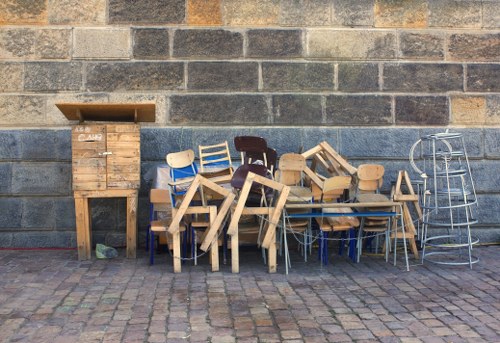
The image displays a collection of various wooden chairs and small tables stacked and arranged against a grey brick wall outdoors. The chairs are made of light-colored, natural wood with different backrest styles, some with slats and others with plain designs. A few chairs are stacked on top of each other, leaning casually against the wall, while others are placed on the cobblestone ground. To the right, there are two metal wire-frame chairs with a shiny silver finish, standing separately from the wooden furniture. On the far left, there is a small wooden cabinet with a slatted door, also made of light wood, positioned close to the brick wall. The scene appears to be set on a paved or cobbled area, possibly a yard or back alley, with natural daylight illuminating the objects and the wall behind them. This arrangement looks like a collection of discarded or stored furniture, relevant to rubbish removal services in North London, such as those offered by Rubbish Collection North London, operating in the N,L postcode area.

In North London, the construction industry is booming, leading to an increase in builders waste. Efficient waste management is crucial to maintain the area's cleanliness and sustainability. Builders waste, also known as construction debris, includes materials like concrete, wood, metals, and plastics that are discarded during building projects.

Proper disposal of builders waste not only helps in keeping neighborhoods clean but also plays a significant role in environmental conservation. Recycling and reusing materials can significantly reduce the carbon footprint of construction activities.

North London residents and businesses are becoming more aware of the importance of responsible waste management. This awareness drives the demand for reliable builders waste removal services that can handle large volumes efficiently.

Understanding Builders Waste

A person's hand holding a transparent plastic bottle over a large, open rubbish bag filled with discarded items, including yellow, blue, and transparent plastic plant pots, alongside other waste materials, in an indoor setting. The background features a cardboard box and a black surface, indicating a waste collection or disposal area, possibly related to building or garden waste management in North London. The plastic waste appears crumpled and partially compressed, with the bottle positioned in the foreground. The scene highlights waste sorting and disposal practices associated with rubbish removal services such as those provided by Rubbish Collection North London, focusing on recyclable plastic items ready for collection or recycling. The environment is well-lit, emphasizing the texture and colours of the waste ingredients.

Builders waste encompasses a wide range of materials generated during construction, renovation, and demolition projects. Common types of builders waste include:

  • Concrete and bricks
  • Wood and timber
  • Metals such as steel and aluminum
  • Plastics and composites
  • Glass and ceramics
  • Insulation materials

Each type of waste requires specific disposal methods to ensure environmental compliance and safety. Improper handling can lead to pollution, health hazards, and legal repercussions.

Understanding the composition of builders waste is the first step towards effective waste management. It allows for better planning and execution of recycling and disposal strategies.

Regulations Governing Builders Waste in North London

A young woman with long, straight, reddish-brown hair is seated on a wooden floor in a well-lit living room, smiling at the camera while holding a transparent plastic container with a bright green recycling symbol on its side. She is dressed in a casual grey T-shirt and dark pants, and appears to be preparing to sort recyclable waste. Behind her, a cream-colored sofa with plush cushions is visible, along with a softly blurred background of light curtains and interior furnishings. The scene reflects an environmentally conscious attitude towards waste management typical in North London households, aligning with services offered by Rubbish Collection North London for efficient rubbish and recycling collection. The focus on the container and her engaging expression highlights the importance of proper waste segregation at home in a suburban or residential setting, with the clean and orderly environment suggesting organized waste disposal practices suitable for local residents handling their rubbish and recyclables.

North London adheres to strict regulations regarding the disposal of builders waste. These regulations are designed to minimize environmental impact and promote sustainable practices within the construction industry.

The Environment Agency oversees waste management practices, ensuring that builders comply with the necessary guidelines. Non-compliance can result in hefty fines and penalties.

Key regulations include:

  • Proper classification of waste types
  • Secure transportation and storage of waste
  • Mandatory recycling of specific materials
  • Documentation and reporting of waste disposal activities

Benefits of Complying with Waste Regulations

A row of overfilled black and green rubbish bags, along with some clear and white bags, are piled on a sidewalk next to a metal railing. Several bags are placed on top of or beside green and brown wheeled bins that are positioned against the railing, with some bags spilling onto the pavement. The rubbish appears to consist of household waste materials, and the scene takes place outdoors, possibly in an urban or suburban area near North London, as suggested by the context of Rubbish Collection North London’s services. In the background, there are green trees and parts of residential buildings visible under natural daylight, indicating a clear, calm day. The rubbish bags are stacked in a disorderly manner, highlighting the need for collection or waste management services in the local area. This scene is representative of typical waste accumulation outside property boundaries requiring professional rubbish removal for efficient clearance in the vicinity.

Adhering to waste management regulations offers multiple benefits:

  1. Environmental Protection: Reduces pollution and conserves natural resources.
  2. Cost Savings: Efficient waste management can lower disposal costs through recycling and reuse.
  3. Reputation: Demonstrates corporate responsibility and enhances brand image.
  4. Legal Compliance: Avoids fines and legal issues associated with improper waste disposal.

Implementing effective waste management practices is not only a legal requirement but also a strategic advantage for businesses operating in North London.

Moreover, sustainable waste practices contribute to the overall well-being of the community, fostering a cleaner and healthier environment.

Choosing the Right Builders Waste Removal Service

A close-up image of a pile of various empty metal tin cans, including both gold and silver-toned cans with smooth, reflective surfaces, some with visible open tops and others with closed, flat tops. The cans are stacked and scattered on a flat surface, with their ridged sides and shiny finishes clearly visible. The background is neutral, highlighting the metallic textures and finishes of the cans, which are typical of waste materials collected for rubbish removal services. The scene emphasizes the need for proper disposal of such metal packaging, aligning with services offered by Rubbish Collection North London in the context of waste management in the area relevant to North London postcode regions.

Selecting a reliable builders waste removal service in North London is essential for seamless waste management. Consider the following factors when making your choice:

  • Experience and Expertise: Look for companies with a proven track record in handling various types of builders waste.
  • Compliance and Certifications: Ensure the service provider adheres to local regulations and possesses necessary certifications.
  • Recycling Capabilities: Opt for services that prioritize recycling and sustainable disposal methods.
  • Pricing and Transparency: Choose companies that offer clear pricing structures without hidden fees.
  • Customer Reviews: Positive feedback from previous clients indicates reliability and quality service.

Engaging a competent waste removal service ensures that your construction project proceeds smoothly while maintaining environmental standards.

Additionally, a professional service can provide tailored solutions that meet your specific waste management needs.

Innovative Solutions for Builders Waste Management

The image displays a collection of various wooden chairs and small tables stacked and arranged against a grey brick wall outdoors. The chairs are made of light-colored, natural wood with different backrest styles, some with slats and others with plain designs. A few chairs are stacked on top of each other, leaning casually against the wall, while others are placed on the cobblestone ground. To the right, there are two metal wire-frame chairs with a shiny silver finish, standing separately from the wooden furniture. On the far left, there is a small wooden cabinet with a slatted door, also made of light wood, positioned close to the brick wall. The scene appears to be set on a paved or cobbled area, possibly a yard or back alley, with natural daylight illuminating the objects and the wall behind them. This arrangement looks like a collection of discarded or stored furniture, relevant to rubbish removal services in North London, such as those offered by Rubbish Collection North London, operating in the N,L postcode area.

Innovative approaches are transforming builders waste management in North London. These solutions focus on reducing waste generation, enhancing recycling rates, and promoting the reuse of materials.

One such innovation is the implementation of on-site waste sorting systems. These systems allow for the immediate separation of different waste types, facilitating easier recycling and disposal.

Additionally, digital tools and software are being used to track waste generation and disposal, providing valuable data that can inform more sustainable practices.

Recycling and Reuse Initiatives

A person's hand holding a transparent plastic bottle over a large, open rubbish bag filled with discarded items, including yellow, blue, and transparent plastic plant pots, alongside other waste materials, in an indoor setting. The background features a cardboard box and a black surface, indicating a waste collection or disposal area, possibly related to building or garden waste management in North London. The plastic waste appears crumpled and partially compressed, with the bottle positioned in the foreground. The scene highlights waste sorting and disposal practices associated with rubbish removal services such as those provided by Rubbish Collection North London, focusing on recyclable plastic items ready for collection or recycling. The environment is well-lit, emphasizing the texture and colours of the waste ingredients.

Recycling and reusing builders waste are pivotal in reducing the environmental impact of construction activities. North London has several initiatives aimed at increasing the recycling rates of construction debris.

For instance, materials like concrete and bricks can be crushed and reused in new construction projects. Similarly, metals can be melted down and repurposed, reducing the need for new raw materials.

Wood and timber can be refurbished and used in various applications, extending their lifecycle and minimizing waste.

Community Engagement and Education

A young woman with long, straight, reddish-brown hair is seated on a wooden floor in a well-lit living room, smiling at the camera while holding a transparent plastic container with a bright green recycling symbol on its side. She is dressed in a casual grey T-shirt and dark pants, and appears to be preparing to sort recyclable waste. Behind her, a cream-colored sofa with plush cushions is visible, along with a softly blurred background of light curtains and interior furnishings. The scene reflects an environmentally conscious attitude towards waste management typical in North London households, aligning with services offered by Rubbish Collection North London for efficient rubbish and recycling collection. The focus on the container and her engaging expression highlights the importance of proper waste segregation at home in a suburban or residential setting, with the clean and orderly environment suggesting organized waste disposal practices suitable for local residents handling their rubbish and recyclables.

Educating the community about the importance of builders waste management is essential for fostering sustainable practices. Workshops, seminars, and informational campaigns can raise awareness and encourage responsible waste disposal.

Engaging local stakeholders, including homeowners, businesses, and construction firms, ensures a collective effort in managing builders waste effectively.

Furthermore, partnerships with recycling centers and environmental organizations can enhance the reach and impact of these educational initiatives.

Advanced Technologies in Waste Management
A row of overfilled black and green rubbish bags, along with some clear and white bags, are piled on a sidewalk next to a metal railing. Several bags are placed on top of or beside green and brown wheeled bins that are positioned against the railing, with some bags spilling onto the pavement. The rubbish appears to consist of household waste materials, and the scene takes place outdoors, possibly in an urban or suburban area near North London, as suggested by the context of Rubbish Collection North London’s services. In the background, there are green trees and parts of residential buildings visible under natural daylight, indicating a clear, calm day. The rubbish bags are stacked in a disorderly manner, highlighting the need for collection or waste management services in the local area. This scene is representative of typical waste accumulation outside property boundaries requiring professional rubbish removal for efficient clearance in the vicinity.

Technological advancements are revolutionizing builders waste management in North London. Innovations such as automated sorting systems, waste-to-energy technologies, and advanced recycling processes are enhancing efficiency and sustainability.

Automated sorting systems use artificial intelligence to identify and separate different types of waste with high precision, reducing manual labor and increasing recycling rates.

Waste-to-energy technologies convert non-recyclable waste into usable energy, providing a sustainable alternative to traditional waste disposal methods.

Environmental Impact of Builders Waste

A close-up image of a pile of various empty metal tin cans, including both gold and silver-toned cans with smooth, reflective surfaces, some with visible open tops and others with closed, flat tops. The cans are stacked and scattered on a flat surface, with their ridged sides and shiny finishes clearly visible. The background is neutral, highlighting the metallic textures and finishes of the cans, which are typical of waste materials collected for rubbish removal services. The scene emphasizes the need for proper disposal of such metal packaging, aligning with services offered by Rubbish Collection North London in the context of waste management in the area relevant to North London postcode regions.

The improper management of builders waste can have severe environmental consequences. Landfills are rapidly reaching capacity, and the decomposition of organic materials can release harmful greenhouse gases.

Additionally, the extraction of new raw materials for construction contributes to deforestation, habitat destruction, and increased carbon emissions.

By effectively managing builders waste, North London can mitigate these adverse effects, promoting a more sustainable and eco-friendly construction industry.

Reducing Carbon Footprint through Waste Management

The image displays a collection of various wooden chairs and small tables stacked and arranged against a grey brick wall outdoors. The chairs are made of light-colored, natural wood with different backrest styles, some with slats and others with plain designs. A few chairs are stacked on top of each other, leaning casually against the wall, while others are placed on the cobblestone ground. To the right, there are two metal wire-frame chairs with a shiny silver finish, standing separately from the wooden furniture. On the far left, there is a small wooden cabinet with a slatted door, also made of light wood, positioned close to the brick wall. The scene appears to be set on a paved or cobbled area, possibly a yard or back alley, with natural daylight illuminating the objects and the wall behind them. This arrangement looks like a collection of discarded or stored furniture, relevant to rubbish removal services in North London, such as those offered by Rubbish Collection North London, operating in the N,L postcode area.

Efficient builders waste management plays a significant role in reducing the carbon footprint of construction activities. Recycling materials like steel, aluminum, and concrete reduces the need for energy-intensive production processes, leading to lower carbon emissions.

Moreover, minimizing waste generation during construction projects means fewer materials end up in landfills, further decreasing the environmental impact.

Implementing green building practices, such as using sustainable materials and adopting energy-efficient technologies, complements waste management efforts in achieving a lower carbon footprint.

Promoting Sustainable Construction Practices

A person's hand holding a transparent plastic bottle over a large, open rubbish bag filled with discarded items, including yellow, blue, and transparent plastic plant pots, alongside other waste materials, in an indoor setting. The background features a cardboard box and a black surface, indicating a waste collection or disposal area, possibly related to building or garden waste management in North London. The plastic waste appears crumpled and partially compressed, with the bottle positioned in the foreground. The scene highlights waste sorting and disposal practices associated with rubbish removal services such as those provided by Rubbish Collection North London, focusing on recyclable plastic items ready for collection or recycling. The environment is well-lit, emphasizing the texture and colours of the waste ingredients.

Promoting sustainable construction practices is essential for long-term environmental health in North London. These practices include:

  • Using eco-friendly and recycled materials
  • Implementing energy-efficient design and technologies
  • Adopting modular and prefabricated construction methods
  • Encouraging the reuse of existing structures and materials
  • Minimizing waste generation through precise planning

By integrating these practices, the construction industry can significantly reduce its ecological footprint while maintaining high standards of quality and efficiency.

Sustainable construction not only benefits the environment but also offers economic advantages through cost savings and improved resource management.

Case Studies: Successful Waste Management in North London
A young woman with long, straight, reddish-brown hair is seated on a wooden floor in a well-lit living room, smiling at the camera while holding a transparent plastic container with a bright green recycling symbol on its side. She is dressed in a casual grey T-shirt and dark pants, and appears to be preparing to sort recyclable waste. Behind her, a cream-colored sofa with plush cushions is visible, along with a softly blurred background of light curtains and interior furnishings. The scene reflects an environmentally conscious attitude towards waste management typical in North London households, aligning with services offered by Rubbish Collection North London for efficient rubbish and recycling collection. The focus on the container and her engaging expression highlights the importance of proper waste segregation at home in a suburban or residential setting, with the clean and orderly environment suggesting organized waste disposal practices suitable for local residents handling their rubbish and recyclables.

Several construction projects in North London have successfully implemented effective waste management strategies. These case studies highlight the benefits of proactive waste handling and the positive outcomes for the community and environment.

For example, the redevelopment of a local housing complex incorporated comprehensive recycling programs, resulting in a significant reduction of waste sent to landfills.

Another project involved the use of recycled materials in paving and landscaping, demonstrating the feasibility and benefits of sustainable construction practices.

Challenges in Builders Waste Management

A row of overfilled black and green rubbish bags, along with some clear and white bags, are piled on a sidewalk next to a metal railing. Several bags are placed on top of or beside green and brown wheeled bins that are positioned against the railing, with some bags spilling onto the pavement. The rubbish appears to consist of household waste materials, and the scene takes place outdoors, possibly in an urban or suburban area near North London, as suggested by the context of Rubbish Collection North London’s services. In the background, there are green trees and parts of residential buildings visible under natural daylight, indicating a clear, calm day. The rubbish bags are stacked in a disorderly manner, highlighting the need for collection or waste management services in the local area. This scene is representative of typical waste accumulation outside property boundaries requiring professional rubbish removal for efficient clearance in the vicinity.

Despite advancements, builders waste management in North London faces several challenges. These include:

  • Limited recycling facilities for certain materials
  • High costs associated with specialized waste removal services
  • Lack of awareness and education among stakeholders
  • Regulatory complexities and compliance issues
  • Logistical difficulties in waste transportation and storage

Addressing these challenges requires collaboration between government bodies, waste management companies, and the construction industry to develop innovative solutions and streamline processes.

Investing in infrastructure and technology can also help overcome some of these obstacles, making waste management more efficient and cost-effective.

Strategies to Overcome Waste Management Challenges

A close-up image of a pile of various empty metal tin cans, including both gold and silver-toned cans with smooth, reflective surfaces, some with visible open tops and others with closed, flat tops. The cans are stacked and scattered on a flat surface, with their ridged sides and shiny finishes clearly visible. The background is neutral, highlighting the metallic textures and finishes of the cans, which are typical of waste materials collected for rubbish removal services. The scene emphasizes the need for proper disposal of such metal packaging, aligning with services offered by Rubbish Collection North London in the context of waste management in the area relevant to North London postcode regions.

To overcome the challenges in builders waste management, the following strategies can be adopted:

  1. Enhancing Recycling Infrastructure: Invest in facilities that can handle a broader range of materials, increasing recycling rates.
  2. Cost Management: Implement cost-effective waste management solutions and explore funding opportunities or incentives for sustainable practices.
  3. Education and Training: Provide comprehensive training for construction workers and stakeholders on effective waste management techniques.
  4. Simplifying Regulations: Work with policymakers to streamline regulations, making compliance easier for businesses.
  5. Improving Logistics: Optimize waste transportation and storage processes to enhance efficiency and reduce costs.

By adopting these strategies, North London can improve its builders waste management system, ensuring a cleaner and more sustainable environment for all.

Continuous evaluation and adaptation of these strategies will be crucial in addressing evolving waste management challenges.

The Future of Builders Waste Management in North London

The image displays a collection of various wooden chairs and small tables stacked and arranged against a grey brick wall outdoors. The chairs are made of light-colored, natural wood with different backrest styles, some with slats and others with plain designs. A few chairs are stacked on top of each other, leaning casually against the wall, while others are placed on the cobblestone ground. To the right, there are two metal wire-frame chairs with a shiny silver finish, standing separately from the wooden furniture. On the far left, there is a small wooden cabinet with a slatted door, also made of light wood, positioned close to the brick wall. The scene appears to be set on a paved or cobbled area, possibly a yard or back alley, with natural daylight illuminating the objects and the wall behind them. This arrangement looks like a collection of discarded or stored furniture, relevant to rubbish removal services in North London, such as those offered by Rubbish Collection North London, operating in the N,L postcode area.

The future of builders waste management in North London looks promising, with ongoing advancements and increasing emphasis on sustainability. Emerging technologies and innovative practices are set to further enhance the efficiency and effectiveness of waste management systems.

Integration of smart technologies, such as IoT devices and AI-powered analytics, will provide real-time monitoring and data-driven insights, enabling better decision-making and resource allocation.

Moreover, the push towards a circular economy will encourage the construction industry to design buildings with waste reduction and material reuse in mind, fostering long-term sustainability.

Embracing a Circular Economy

A person's hand holding a transparent plastic bottle over a large, open rubbish bag filled with discarded items, including yellow, blue, and transparent plastic plant pots, alongside other waste materials, in an indoor setting. The background features a cardboard box and a black surface, indicating a waste collection or disposal area, possibly related to building or garden waste management in North London. The plastic waste appears crumpled and partially compressed, with the bottle positioned in the foreground. The scene highlights waste sorting and disposal practices associated with rubbish removal services such as those provided by Rubbish Collection North London, focusing on recyclable plastic items ready for collection or recycling. The environment is well-lit, emphasizing the texture and colours of the waste ingredients.

A circular economy model focuses on minimizing waste and making the most of resources. In the context of builders waste, this means designing construction projects that prioritize the reuse and recycling of materials.

By adopting circular economy principles, North London can significantly reduce the environmental impact of construction activities while promoting economic growth and innovation.

Collaboration between various stakeholders, including manufacturers, construction firms, and waste management companies, is essential to successfully implement this model.

Innovation in Material Science

A young woman with long, straight, reddish-brown hair is seated on a wooden floor in a well-lit living room, smiling at the camera while holding a transparent plastic container with a bright green recycling symbol on its side. She is dressed in a casual grey T-shirt and dark pants, and appears to be preparing to sort recyclable waste. Behind her, a cream-colored sofa with plush cushions is visible, along with a softly blurred background of light curtains and interior furnishings. The scene reflects an environmentally conscious attitude towards waste management typical in North London households, aligning with services offered by Rubbish Collection North London for efficient rubbish and recycling collection. The focus on the container and her engaging expression highlights the importance of proper waste segregation at home in a suburban or residential setting, with the clean and orderly environment suggesting organized waste disposal practices suitable for local residents handling their rubbish and recyclables.

Advancements in material science are paving the way for more sustainable construction materials. Innovations such as self-healing concrete, recycled plastic lumber, and eco-friendly insulation materials are revolutionizing the industry.

These materials not only reduce the reliance on non-renewable resources but also enhance the durability and performance of buildings.

Investing in research and development of sustainable materials will be crucial in driving the construction industry towards a greener future.

Policy Support and Incentives
A row of overfilled black and green rubbish bags, along with some clear and white bags, are piled on a sidewalk next to a metal railing. Several bags are placed on top of or beside green and brown wheeled bins that are positioned against the railing, with some bags spilling onto the pavement. The rubbish appears to consist of household waste materials, and the scene takes place outdoors, possibly in an urban or suburban area near North London, as suggested by the context of Rubbish Collection North London’s services. In the background, there are green trees and parts of residential buildings visible under natural daylight, indicating a clear, calm day. The rubbish bags are stacked in a disorderly manner, highlighting the need for collection or waste management services in the local area. This scene is representative of typical waste accumulation outside property boundaries requiring professional rubbish removal for efficient clearance in the vicinity.

Government policies and incentives play a vital role in promoting sustainable builders waste management practices. Financial incentives, tax breaks, and grants can encourage businesses to adopt eco-friendly waste management solutions.

Additionally, regulations that mandate recycling and waste reduction can drive the construction industry to implement more sustainable practices.

Supportive policies not only facilitate the transition to sustainable waste management but also contribute to the overall economic and environmental well-being of North London.

Conclusion: Towards a Sustainable North London

A close-up image of a pile of various empty metal tin cans, including both gold and silver-toned cans with smooth, reflective surfaces, some with visible open tops and others with closed, flat tops. The cans are stacked and scattered on a flat surface, with their ridged sides and shiny finishes clearly visible. The background is neutral, highlighting the metallic textures and finishes of the cans, which are typical of waste materials collected for rubbish removal services. The scene emphasizes the need for proper disposal of such metal packaging, aligning with services offered by Rubbish Collection North London in the context of waste management in the area relevant to North London postcode regions.

Effective management of builders waste is essential for fostering a sustainable and clean environment in North London. By understanding the types of waste, adhering to regulations, and adopting innovative solutions, the construction industry can significantly reduce its environmental impact.

Embracing sustainable practices, investing in advanced technologies, and promoting community engagement are key to overcoming the challenges associated with builders waste management.

As North London continues to grow, prioritizing responsible waste management will ensure that development meets the needs of the present without compromising the well-being of future generations.

Contact us today to learn more about our builders waste removal services and how we can help your construction project stay clean and sustainable. Book your service now and contribute to a greener North London.

Frequently Asked Questions

Our builders waste removal team uses state-of-the-art equipment and industry-best methods to efficiently handle all types of construction debris. From heavy-duty dumpsters to specialized sorting machinery, we ensure safe and effective waste management. With over 15 years of experience, we guarantee reliable service. Contact our team for a quick quote.

Yes, we are proudly accredited by leading industry bodies such as the Environmental Waste Association (EWA). These accreditations reflect our commitment to high standards and professionalism in builders waste management. Trust our certified team for your waste removal needs. Reach out to us today for more information.

Absolutely. We hold all required certifications and comprehensive insurance to ensure legal compliance and protect your project. Our licensed team prioritizes safety and reliability, giving you peace of mind. Choose a trusted partner with verified credentials. Contact us for a secure and compliant waste removal solution.

We prioritize environmental responsibility by recycling up to 90% of builders waste, minimizing landfill impact. Our sustainable practices include sorting materials for reuse and partnering with certified recycling facilities. Committed to green initiatives, we help you achieve eco-friendly project goals. Get in touch to learn more about our recycling efforts.

With over 20 years of experience in the builders waste removal industry, our team has a proven track record of managing projects of all sizes. Our expertise ensures efficient and hassle-free waste management tailored to your needs. Trust our seasoned professionals for reliable service. Contact us for expert assistance today.

Yes, we offer competitive and transparent pricing with no hidden fees. Our affordable builders waste removal services are tailored to fit various budgets, ensuring you receive quality service without unexpected costs. We provide clear estimates upfront to help you plan effectively. Request a quote from our team today.

Safety is our top priority. Our builders waste removal services adhere to strict safety protocols, ensuring secure handling and disposal of all materials. We use protective equipment and trained personnel to maintain a safe work environment on your construction site. Choose a service that values your site's safety. Contact us to learn more.

Yes, we offer reliable and trusted builders waste removal services across multiple locations. Our local teams are familiar with regional regulations and can provide prompt, efficient service tailored to your area. Find the best waste removal solution close to you. Get in touch with our nearby offices today.

We recycle a wide range of builders waste, including concrete, wood, metals, bricks, and plastics. Our comprehensive recycling program ensures that materials are sorted and processed responsibly, reducing environmental impact. Let us help you achieve sustainable construction practices. Contact our team to discuss your recycling needs.

We pride ourselves on prompt response times, often scheduling waste removal within 24 hours of your request. Our efficient team ensures that your project stays on track without delays. Whether it's a small renovation or a large construction site, we're ready to assist quickly. Reach out to us for fast and reliable service.

Yes, we provide fully licensed builders waste removal services tailored for commercial projects. Our experienced team understands the complexities of large-scale waste management and ensures compliance with all regulations. Trust us to handle your commercial waste efficiently and professionally. Contact us to discuss your commercial needs.

We uphold ethical practices by adhering to all industry regulations, ensuring transparency in our operations, and committing to sustainable waste management solutions. Our team undergoes regular training to maintain high standards of integrity and responsibility. Partner with a company that values ethical waste practices. Get in touch with us today.
Rubbish Collection North London

Discover effective strategies for managing builders waste in North London, promoting sustainability and environmental protection through innovative solutions and compliance with regulations.

Book Your Service Now

Get In Touch With Us.

Please fill out the form below to send us an email and we will get back to you as soon as possible.